Italian artist
Also known as: Michelangelo di Lodovico Buonarroti Simoni
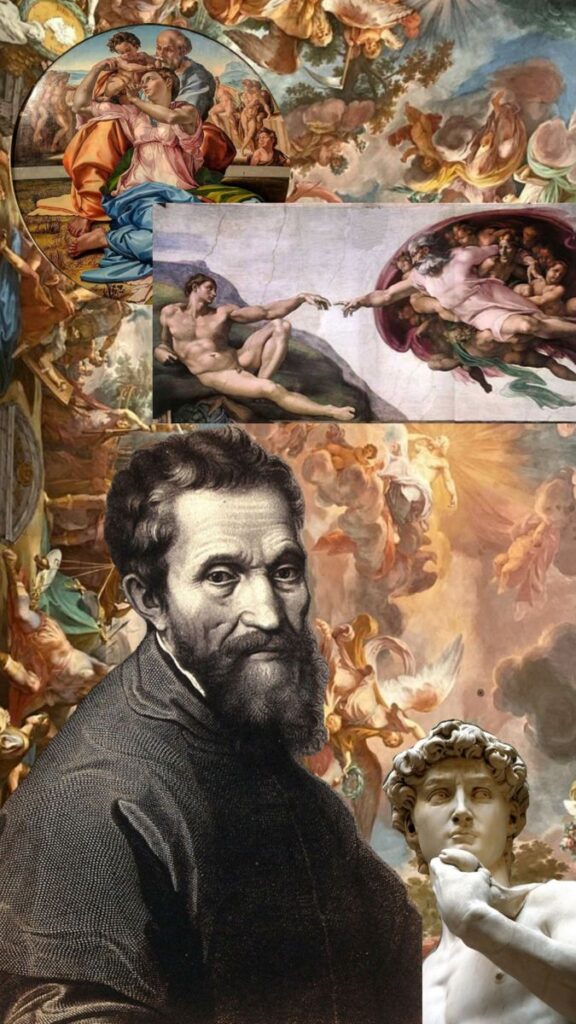
Michelangelo (born March 6, 1475, Caprese, Republic of Florence [Italy]—died February 18, 1564, Rome, Papal States) was an Italian Renaissance sculptor, painter, architect, and poet who exerted an unparalleled influence on the development of Western art.
Michelangelo was considered the greatest living artist in his lifetime, and ever since then he has been held to be one of the greatest artists of all time. A number of his works in painting, sculpture, and architecture rank among the most famous in existence. Although the frescoes on the ceiling of the Sistine Chapel (Vatican; see below) are probably the best known of his works, the artist thought of himself primarily as a sculptor. His practice of several arts, however, was not unusual in his time, when all of them were thought of as based on design, or drawing. Michelangelo worked in marble sculpture all his life and in the other arts only during certain periods. The high regard for the Sistine ceiling is partly a reflection of the greater attention paid to painting in the 20th century and partly, too, because many of the artist’s works in other media remain unfinished.
A side effect of Michelangelo’s fame in his lifetime was that his career was more fully documented than that of any artist of the time or earlier. He was the first Western artist whose biography was published while he was alive—in fact, there were two rival biographies. The first was the final chapter in the series of artists’ lives (1550) by the painter and architect Giorgio Vasari. It was the only chapter on a living artist and explicitly presented Michelangelo’s works as the culminating perfection of art, surpassing the efforts of all those before him. Despite such an encomium, Michelangelo was not entirely pleased and arranged for his assistant Ascanio Condivi to write a brief separate book (1553); probably based on the artist’s own spoken comments, this account shows him as he wished to appear. After Michelangelo’s death, Vasari in a second edition (1568) offered a rebuttal. While scholars have often preferred the authority of Condivi, Vasari’s lively writing, the importance of his book as a whole, and its frequent reprinting in many languages have made it the most usual basis of popular ideas on Michelangelo and other Renaissance artists. Michelangelo’s fame also led to the preservation of countless mementos, including hundreds of letters, sketches, and poems, again more than of any contemporary. Yet despite the enormous benefit that has accrued from all this, in controversial matters often only Michelangelo’s side of an argument is known.
Early life and works
Michelangelo Buonarroti was born to a family that had for several generations belonged to minor nobility in Florence but had, by the time the artist was born, lost its patrimony and status. His father had only occasional government jobs, and at the time of Michelangelo’s birth he was administrator of the small dependent town of Caprese. A few months later, however, the family returned to its permanent residence in Florence. It was something of a downward social step to become an artist, and Michelangelo became an apprentice relatively late, at 13, perhaps after overcoming his father’s objections. He was apprenticed to the city’s most prominent painter, Domenico Ghirlandaio, for a three-year term, but he left after one year, having (Condivi recounts) nothing more to learn. Several drawings, copies of figures by Ghirlandaio and older great painters of Florence, Giotto and Masaccio, survive from this stage; such copying was standard for apprentices, but few examples are known to survive. Obviously talented, he was taken under the wing of the ruler of the city, Lorenzo de’ Medici, known as the Magnificent. Lorenzo surrounded himself with poets and intellectuals, and Michelangelo was included. More important, he had access to the Medici art collection, which was dominated by fragments of ancient Roman statuary. (Lorenzo was not such a patron of contemporary art as legend has made him; such modern art as he owned was to ornament his house or to make political statements.) The bronze sculptor Bertoldo di Giovanni, a Medici friend who was in charge of the collection, was the nearest he had to a teacher of sculpture, but Michelangelo did not follow his medium or in any major way his approach. Still, one of the two marble works that survive from the artist’s first years is a variation on the composition of an ancient Roman sarcophagus, and Bertoldo had produced a similar one in bronze. This composition is the Battle of the Centaurs (c. 1492). The action and power of the figures foretell the artist’s later interests much more than does the Madonna of the Stairs (c. 1491), a delicate low relief that reflects recent fashions among such Florentine sculptors as Desiderio da Settignano.
Florence was at this time regarded as the leading centre of art, producing the best painters and sculptors in Europe, and the competition among artists was stimulating. The city was, however, less able than earlier to offer large commissions, and leading Florentine-born artists, such as Leonardo da Vinci and Leonardo’s teacher, Andrea del Verrocchio, had moved away for better opportunities in other cities. The Medici were overthrown in 1494, and even before the end of the political turmoil Michelangelo had left.