Greek philosopher
Also known as: Aristoteles
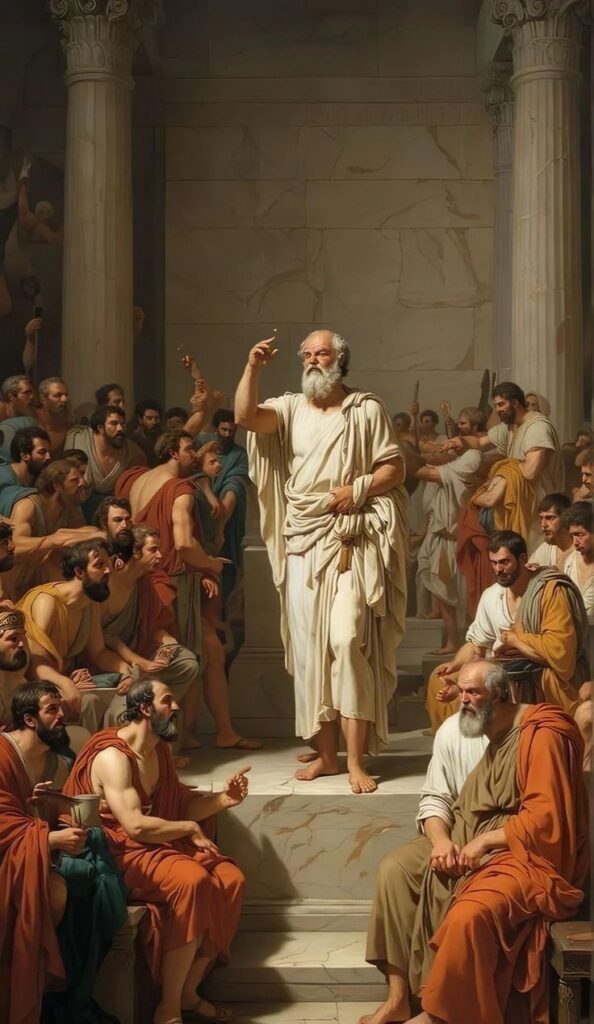
Aristotle (born 384 bce, Stagira, Chalcidice, Greece—died 322, Chalcis, Euboea) was an ancient Greek philosopher and scientist, one of the greatest intellectual figures of Classical antiquity and Western history. He was the author of a philosophical and scientific system that became the framework and vehicle for both Christian Scholasticism and medieval Islamic philosophy. Even after the intellectual revolutions of the Renaissance, the Reformation, and the Enlightenment, Aristotelian concepts remained embedded in Western thinking.
Aristotle’s intellectual range was vast, covering most of the sciences and many of the arts, including biology, botany, chemistry, ethics, history, logic, metaphysics, rhetoric, philosophy of mind, philosophy of science, physics, poetics, political theory, psychology, and zoology. He was the founder of formal logic, devising for it a finished system that for centuries was regarded as the sum of the discipline; and he pioneered the study of zoology, both observational and theoretical, in which some of his work remained unsurpassed until the 19th century. But he is, of course, most outstanding as a philosopher. His writings in ethics and political theory as well as in metaphysics and the philosophy of science continue to be studied, and his work remains a powerful current in contemporary philosophical debate.
This article deals with Aristotle’s life and thought. For the later development of Aristotelian philosophy, see Aristotelianism. For treatment of Aristotelianism in the full context of Western philosophy, see philosophy, Western.
Life
The Academy
Aristotle was born on the Chalcidic peninsula of Macedonia, in northern Greece. His father, Nicomachus, was the physician of Amyntas III (reigned c. 393–c. 370 bce), king of Macedonia and grandfather of Alexander the Great (reigned 336–323 bce). After his father’s death in 367, Aristotle migrated to Athens, where he joined the Academy of Plato (c. 428–c. 348 bce). He remained there for 20 years as Plato’s pupil and colleague.
Many of Plato’s later dialogues date from these decades, and they may reflect Aristotle’s contributions to philosophical debate at the Academy. Some of Aristotle’s writings also belong to this period, though mostly they survive only in fragments. Like his master, Aristotle wrote initially in dialogue form, and his early ideas show a strong Platonic influence. His dialogue Eudemus, for example, reflects the Platonic view of the soul as imprisoned in the body and as capable of a happier life only when the body has been left behind. According to Aristotle, the dead are more blessed and happier than the living, and to die is to return to one’s real home.