
Influencer Tools: Top 25 Proven Tools Every Creator Needs to Rise in 2026

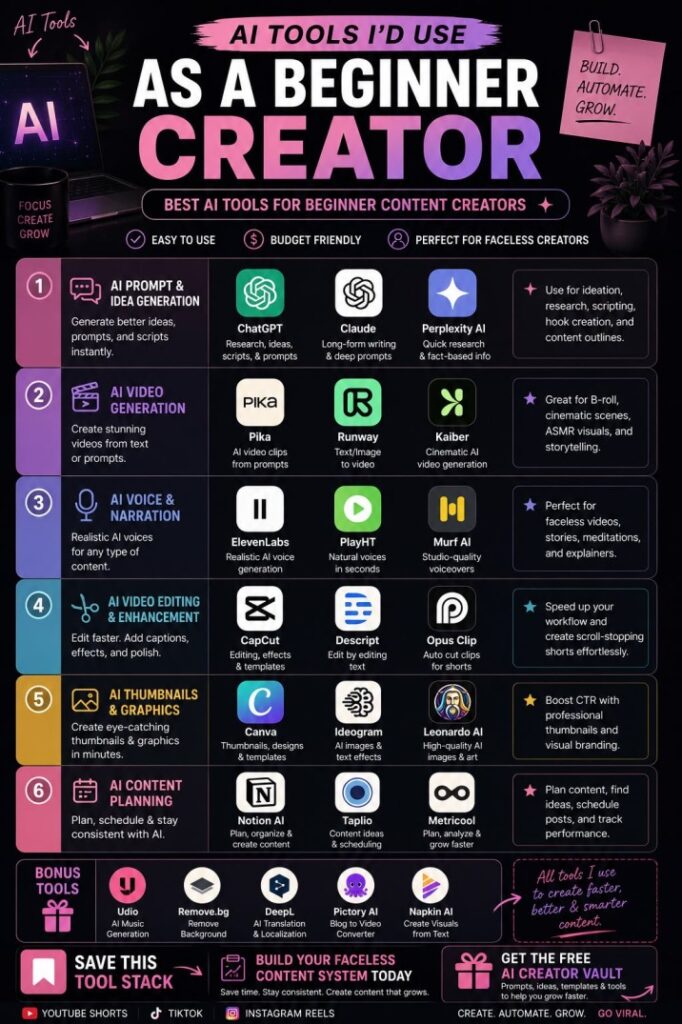
Every influencer trying to grow in 2026 needs the right influencer tools in their corner. Not because success is impossible without the right influencer tools but because the creators who are winning right now are working smarter, moving faster, and producing better content than their competition by using the right software, apps, and platforms at the right time. This guide covers the top 25 influencer tools across every category you need content creation, scheduling, analytics, monetization, and more so you can stop guessing and start growing.
Why Influencer Tools Matter More Than Ever in 2026
The influencer space in 2026 is more competitive than it has ever been. Millions of people are posting content daily across Instagram, TikTok, YouTube, and LinkedIn. Most of them are using the same basic phone camera, the same free editing app, and the same gut-feel posting schedule. The creators who stand out are not necessarily more talented they are better equipped.
Good influencer tools save you hours every week. They help you understand what your audience actually responds to. They make your content look and sound more professional without requiring a full production team. They handle the repetitive tasks that drain your energy so you can spend more time on the work that actually matters making content people want to watch, share, and come back for.
Here are the 25 best influencer tools available in 2026, broken down by category.
Content Creation Influencer Tools
1. CapCut
CapCut remains the go-to video editing app for short-form content creators in 2026. It is free, available on both mobile and desktop, and packed with features that used to require professional software. Auto-captions, background removal, speed ramping, and trending audio syncing are all built in. If you make content for TikTok, Instagram Reels, or YouTube Shorts, CapCut is the first influencer tool you should have on your phone.
2. Adobe Premiere Pro
For longer YouTube videos or any content that needs a polished, professional finish, Adobe Premiere Pro is the industry standard. The learning curve is real but the control it gives you over color grading, audio mixing, transitions, and multi-track editing is unmatched by any other tool at this level. Pair it with Adobe After Effects for motion graphics and your production quality goes up significantly.
3. Canva
Canva is one of the most used influencer tools on this list for good reason. It handles thumbnails, Instagram posts, story graphics, Pinterest pins, brand kits, media kits, and pitch decks all in one place, all without needing design experience. The Pro version adds a background remover, brand consistency features, and a massive template library. For any influencer who needs to produce visual content quickly and consistently, Canva is non-negotiable.
4. Descript
Descript is a podcast and video editing tool that works like a word processor. You edit your audio and video by editing the transcript delete a word from the text and it disappears from the recording. It also removes filler words automatically, generates accurate captions, and produces polished audiograms for social media. For influencers who create podcasts, long interviews, or talking-head videos, Descript cuts editing time dramatically.
5. ElevenLabs
ElevenLabs is an AI voice generation tool that produces remarkably natural-sounding voiceovers from text. For influencers who create faceless content, explainer videos, or need voiceover in multiple languages, it removes the need for professional voice talent entirely. The voice cloning feature also lets you create a consistent branded voice across all your content.
Photography and Visual Influencer Tools
6. Lightroom Mobile
Adobe Lightroom Mobile is the standard photo editing tool for influencers who care about visual consistency. The ability to create and apply presets across your entire photo library in seconds means your Instagram feed stays cohesive without spending hours editing individual images. The free version covers most needs he paid version adds cloud sync and advanced masking tools.
7. VSCO
VSCO sits alongside Lightroom as a go-to photo editing influencer tool, particularly for creators whose aesthetic leans toward film-style or vintage looks. Its preset library is widely respected in the photography community and its community features give you additional exposure to other visual creators. Simple, fast, and consistently good results.
8. Remove.bg
Remove.bg does exactly one thing removes image backgrounds instantly and it does it better than almost any other tool available. For product flat lays, profile pictures, thumbnail backgrounds, and promotional graphics, it saves significant time compared to manual background removal in Photoshop.
Scheduling and Planning Influencer Tools
9. Later
Later is one of the best scheduling influencer tools available for visual platforms. It lets you plan and schedule posts for Instagram, TikTok, Pinterest, LinkedIn, and Facebook from a single dashboard. The visual calendar shows exactly how your feed will look before anything goes live which matters a lot when your aesthetic is part of your brand. The link-in-bio tool is also clean and easy to set up.
10. Buffer
Buffer is a straightforward social media scheduling tool that works well for influencers managing multiple platforms. It is less visually oriented than Later but offers cleaner analytics and a simpler interface that makes batch-scheduling content fast and low-friction. The free plan covers three channels enough for creators just starting to get organized.
11. Notion
Notion is the content planning and organization tool that thousands of full-time influencers use to run their entire operation. Content calendars, brand deal trackers, video idea databases, collaboration workspaces, and publishing checklists all live inside one flexible system. It takes time to set up properly but once it is built, it becomes the operating system for your entire content business.
Analytics Influencer Tools
12. Social Blade
Social Blade tracks growth data across YouTube, TikTok, Instagram, and Twitch for your own accounts and for any other creator you want to study. It shows subscriber and follower trends over time, estimated earnings ranges, and growth grades that tell you whether a channel is accelerating or slowing down. For competitive research and benchmarking your own growth, it is one of the most useful free influencer tools available.
13. Sprout Social
Sprout Social is a professional-grade analytics and social media management platform used by both individual creators and brand teams. Its reporting features go deep engagement rates by post type, optimal posting times based on your specific audience, follower demographic breakdowns, and competitor benchmarking. It is priced at a premium, but for influencers doing brand deals regularly, the data it provides is worth the investment.
14. YouTube Studio
YouTube Studio is the native analytics platform built into YouTube and it is genuinely powerful. Watch time, audience retention curves, click-through rates, traffic sources, subscriber growth, and revenue data are all available in detail. Every YouTube influencer should spend time each week inside YouTube Studio understanding which videos their audience finishes, which ones they skip, and where their new viewers are coming from.
15. TikTok Analytics
TikTok’s built-in analytics dashboard accessible from any Creator or Business account shows video performance, follower growth, audience demographics, and traffic sources. The “Followers” tab is particularly useful, showing you when your audience is most active so you can time your posts for maximum reach. Free, accurate, and completely underused by most creators.
SEO and Discoverability Influencer Tools
16. VidIQ
VidIQ is a YouTube-specific influencer tool that helps you understand what people are searching for and how to position your videos to show up in those searches. It shows search volume, competition scores, trending topics in your niche, and keyword suggestions directly inside YouTube. For any influencer serious about growing a YouTube channel through search traffic, VidIQ is one of the most practical tools on this list.
17. TubeBuddy
TubeBuddy works alongside VidIQ as a YouTube browser extension that adds keyword research, A/B thumbnail testing, bulk processing tools, and SEO scoring directly to your YouTube dashboard. Many serious YouTube creators use both tools together. The A/B thumbnail testing feature alone which shows different thumbnails to different viewers and tells you which one gets more clicks can meaningfully improve your click-through rate over time.
18. Ubersuggest
Ubersuggest is an accessible SEO tool from Neil Patel that helps influencers who also run blogs or websites understand what their audience is searching for on Google. Keyword research, content ideas, backlink analysis, and site auditing are all available at a price point that works for independent creators. For influencers building a content hub beyond social media, Ubersuggest fills an important gap.
Monetization Influencer Tools
19. Gumroad
Gumroad is the simplest way for influencers to sell digital products directly to their audience. E-books, presets, templates, courses, memberships, and downloadable resources all sell through Gumroad with minimal setup. There are no monthly fees Gumroad takes a percentage of each sale. For influencers who want to start monetizing beyond brand deals without the complexity of a full e-commerce setup, Gumroad is the fastest starting point.
20. Stan Store
Stan Store has become the preferred link-in-bio monetization tool for TikTok and Instagram influencers in 2026. It combines a link-in-bio page with a built-in digital storefront, allowing you to sell products, book calls, offer subscriptions, and capture email leads all from a single link. It is specifically designed for the social media creator workflow and requires almost no technical knowledge to set up.
21. Patreon
Patreon remains one of the most reliable recurring revenue tools for influencers with an engaged audience. Members pay a monthly fee in exchange for exclusive content, early access, behind-the-scenes material, or direct access to the creator. For influencers who have built genuine loyalty with their audience, Patreon creates a stable income stream that does not depend on algorithm performance or brand deal availability.
Brand Deal and Business Influencer Tools
22. Beacons
Beacons is a creator business platform that handles multiple sides of the influencer business in one place. It includes a link-in-bio page, media kit builder, brand deal rate calculator, invoice generator, and audience analytics. For influencers who are actively pitching to brands and managing multiple partnerships, Beacons removes a lot of the administrative friction that eats into creative time.
23. AspireIQ
AspireIQ is an influencer marketing platform that connects creators with brands actively looking for partnerships. Rather than cold-pitching brands through email, you create a profile on AspireIQ and brands come to you with campaign briefs. It is used by both mid-size and large brands, making it a useful addition to any influencer’s outreach strategy alongside direct pitching.
24. HoneyBook
HoneyBook is a client management and business operations tool that helps influencers manage the professional side of brand deals cleanly. Contracts, invoices, project timelines, payment tracking, and client communication all live in one place. For any influencer doing regular paid partnerships, having a proper contract and invoicing system protects you legally and makes you look more professional to brand partners.
Communication and Community Influencer Tools
25. Discord
Discord has become one of the most valuable community-building influencer tools available in 2026. Creating a private Discord server gives your most engaged followers a dedicated space to connect with each other and with you directly something no social media algorithm can interfere with. Many influencers use Discord for exclusive Q&As, early content drops, accountability groups, and direct fan engagement that builds loyalty far deeper than comment sections ever could.
How to Choose the Right Influencer Tools for Your Stage
Not every tool on this list is right for every creator at every stage. Here is a simple way to think about it based on where you are right now.
If you are just starting out focus on CapCut, Canva, Later or Buffer, and YouTube Studio or TikTok Analytics.These four influencer tools cover content creation, scheduling, and understanding your audience without spending anything. Get these right before adding more complexity.
If you have 10,000 to 50,000 followers add VidIQ or TubeBuddy if you are on YouTube, Notion for content planning, Gumroad or Stan Store for your first digital product, and Beacons for brand deal management. This is the stage where organization and monetization start to matter seriously.
If you are above 50,000 followers, Sprout Social for deep analytics, HoneyBook for contract and invoice management, Patreon for recurring revenue, AspireIQ for brand connections, and Discord for community building all become worth the investment. At this level, your time is your most limited resource, and the right tools pay for themselves many times over.
Building Your Influencer Tool Stack the Right Way
The biggest mistake most creators make with influencer tools is trying to use everything at once. They sign up for twelve platforms, spend two weeks learning them all, get overwhelmed, and go back to doing everything manually. That approach wastes time and money.
Instead, pick one tool per category, learn it properly, and integrate it into your workflow before adding anything else.A simple set of influencer tools used consistently beats a complex stack used poorly every single time.
Start with creation, then scheduling, then analytics, then monetization. Build your tool stack the same way you build your content one layer at a time, with intention, based on what your specific audience and business actually need.
Here is the expanded conclusion replace your current one with this:
Conclusion: The Right Influencer Tools Change Everything
The right influencer tools do not replace hard work, consistency, or genuine connection with your audience. What they do is remove the friction between your ideas and your output. They give you data to make smarter decisions. They handle the repetitive work so you can focus on the creative work. They make it possible to run a serious content business without a full team behind you.
In 2026, the creators who rise are not just the most talented they are the most prepared. The difference between a creator stuck at 5,000 followers and one growing past 500,000 is rarely raw talent. Most of the time it comes down to systems, habits, and yes the right tools used consistently over time.
Think about what your content creation process looks like right now. How long does editing take you? How much time do you spend manually posting to each platform? Do you actually know which of your videos your audience watches all the way through and which ones they click away from in the first ten seconds? Do you have a clean way to send a contract when a brand reaches out? These are not small questions. Each one represents hours of your week and real money left on the table.
Good influencer tools answer these questions. They turn guesswork into decisions backed by real data. They turn a chaotic solo operation into something that runs cleanly and scales without burning you out. Good influencer tools give you back time and time is the one thing every creator is always running short on.
At the same time, tools are only as good as the person using them. The best scheduling platform in the world does nothing for a creator who never sits down to plan their content. The most detailed analytics dashboard means nothing if you never look at it and adjust. Every tool on this list works but only if you do.
So start simple. Pick one tool from each category that fits where you are right now. Learn it properly. Build it into your weekly workflow until using it feels automatic. Then add the next one. Over six months, you will have built a content operation that would have seemed completely out of reach when you started.
In 2026, the window to build a real audience and a real income as an independent creator is still wide open. The platforms are still growing. The audiences are still there. The brand budgets allocated to influencer partnerships are bigger than they have ever been. What separates the creators who cash in on that opportunity from those who watch it pass is preparation, consistency, and the right influencer tools working quietly behind every piece of content they publish.
Pick your tools, build your stack, show up every single day, and go make something worth watching.