
Are Smartphones Making Us Dumb? The Hidden Cost of Always Being Connected 2026

Smartphones are the most powerful tool ever put in a human pocket. They can translate languages, navigate cities, and answer almost any question in seconds. Yet a growing body of scientific research points to a troubling paradox: the smarter our phones get, the less we may be using our own brains. The question is no longer just philosophical are smartphones making us dumb? The evidence says we need to take the concern seriously.

How Smartphones Are Rewiring the Human Brain
The human brain is remarkably adaptable. Neuroscientists call this quality neuroplasticity — the brain’s ability to reorganize itself based on experience and habit. For thousands of years, the experiences that shaped our brains included deep reading, memorization, navigation, face-to-face conversation, and problem-solving under uncertainty.
Smartphones have disrupted nearly every one of these cognitive exercises.
When we outsource memory to a device, we exercise that mental muscle less. When we let GPS navigate every turn, the hippocampus — the brain region responsible for spatial reasoning — gets less of a workout. When we skim 15-second videos instead of reading long-form text, our capacity for sustained attention gradually weakens.
A landmark study from the University of Texas at Austin found that even having a smartphone resting face-down on a desk — turned off and silent — was enough to reduce participants’ available cognitive capacity. Simply knowing the phone was nearby pulled mental resources away from the task at hand. The researchers called this the “brain drain” effect.
The Attention Span Crisis: Smartphones and Cognitive Decline
One of the most cited — and debated — statistics in digital culture is that the average human attention span has dropped from 12 seconds in 2000 to around 8 seconds today, shorter than that of a goldfish. While the “goldfish” comparison is an oversimplification, the underlying trend is real and measurable.
Social media platforms are engineered to hijack attention. Infinite scroll, autoplay videos, notification badges, and variable reward loops (the same psychological mechanism found in slot machines) are all deliberately designed to keep users engaged as long as possible. The result is a constant state of partial attention — never fully focused on anything, always half-watching for the next ping.
This fragmented attention is not just annoying. Research published in the journal PLOS ONE found that heavy smartphone users performed significantly worse on tests of sustained attention and working memory compared to light users. Working memory — the ability to hold information in mind while using it — is foundational to learning, reasoning, and creative thought.
Smartphones making us dumb is not a metaphor. It is a measurable shift in cognitive performance.
Most people carry a supercomputer in their pocket every single day. Yet scientists, educators, and psychologists are raising a serious alarm: smartphones making us dumb is not just a catchy phrase — it is a measurable, real, and growing crisis. If you have ever forgotten a phone number you used to know by heart, lost your train of thought mid-sentence, or spent two hours scrolling without meaning to, you have already felt the effect of smartphones making us dumb firsthand.
This article dives deep into the research, the psychology, and the everyday habits that explain why smartphones making us dumb has become one of the most important conversations of our generation.
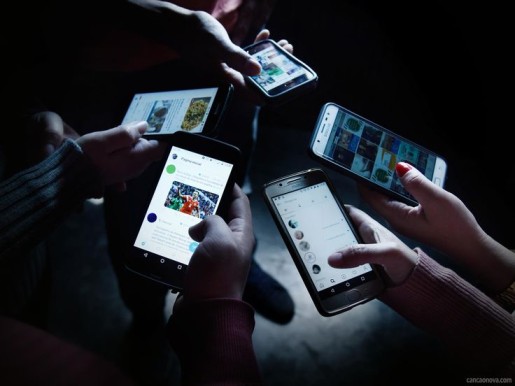
Memory Outsourcing: When Google Becomes Your Brain
There is a phenomenon researchers call the Google Effect — the tendency to forget information that we know can be easily retrieved online. Studies led by Columbia University psychologist Betsy Sparrow demonstrated that when people expect to have future access to information, they are less likely to remember the information itself, and more likely to remember where to find it.
In small doses, this is efficient. We have always used external tools books, calendars, maps to extend our memory. The problem emerges when the habit becomes so pervasive that we stop building internal knowledge structures altogether.
Understanding is not the same as finding. When you genuinely know something — a historical event, a mathematical principle, a social dynamic — you can connect it to other knowledge, apply it in novel situations, and use it as a foundation for deeper insight. When you merely know how to Google it, you have only a shallow reference, not real understanding and now smartphone is just making us dumb in different ways then one .
Heavy reliance on smartphones for information retrieval is eroding the kind of deep, interconnected knowledge that enables critical thinking, creativity, and innovation.
Columbia University psychologist Betsy Sparrow identified a phenomenon called the Google Effect — when people know information can be found online instantly, they do not bother storing it in long-term memory. This is one of the most well-documented ways smartphones making us dumb operates below our awareness.
True knowledge is not the same as knowing where to search. When you genuinely understand something — a historical event, a scientific concept, a social pattern — you can connect it to other ideas, apply it in unexpected situations, and use it as a building block for deeper insight. When smartphones making us dumb replaces actual memory with search dependency, you are left with shallow familiarity rather than real understanding.
Think about it: Can you recall five phone numbers of people close to you? Most people today cannot name even two. Ten years ago, most people knew a dozen by heart. That is smartphones making us dumb in the most concrete, everyday way possible — erasing the mental habits that keep our minds sharp.
Phone Addiction and Declining Critical Thinking
Critical thinking requires time, discomfort, and mental effort. It means sitting with ambiguity, evaluating evidence, and resisting the urge to accept the first plausible answer.
Smartphones work against every one of these requirements.
When a question arises, the phone offers an instant answer — often from a single source, often algorithmically selected to confirm what we already believe. This phenomenon, known as the filter bubble, means that regular smartphone users are increasingly exposed only to information that reinforces existing views. The result is reduced exposure to challenging ideas and a weakening of the mental habit of questioning assumptions.smartphones making us dumb more ways than one
Critical thinking requires mental discomfort. It means sitting with uncertainty, evaluating multiple sources, questioning assumptions, and resisting the pull of easy answers. Smartphones work against every single one of these requirements.
When a question comes up, your phone delivers an instant answer — typically from a single source, often algorithmically selected to match what you already believe. This filter bubble effect means that regular smartphone users are systematically exposed to less challenging information, which accelerates smartphones making us dumb by reinforcing existing beliefs rather than testing them.
The content ecosystem on smartphones also rewards simplicity over nuance. Headlines are optimized for clicks, not accuracy. Short-form videos reduce complex topics to 30-second takes. Outrage drives engagement, so algorithms amplify the most extreme and emotionally charged content. For users who consume most of their information through phone-based social media, smartphones making us dumb shows up as a reduced capacity to evaluate evidence, tolerate complexity, or form independent conclusions.
Furthermore, the sheer volume of content competing for attention online rewards sensationalism over nuance. Headlines are optimized for clicks, not accuracy. Social media algorithms amplify outrage because it drives engagement. Users who consume most of their information through phone-based social media are, by design, exposed to a distorted and simplified version of reality.
Are phones making us dumb? In the domain of critical thinking, the answer may be yes — not because the devices are inherently harmful, but because of how they are designed and how we habitually use them.
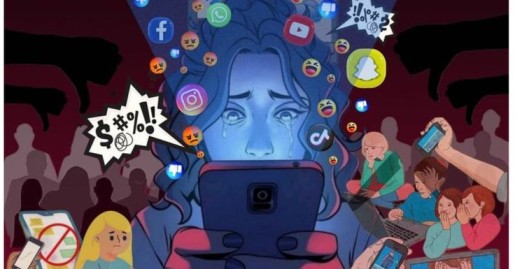
The Social Intelligence Paradox
Smartphones promised to keep us more connected. In many ways they have. But there is mounting evidence that heavy phone use is undermining the social intelligence that emerges from genuine human interaction.
Face-to-face conversation requires reading micro-expressions, managing emotional tone in real time, tolerating awkward silences, and navigating social complexity without an edit button or emoji buffer. These are cognitively demanding tasks that build empathy, emotional regulation, and social competence.
Research from the University of Michigan showed that empathy levels among college students dropped significantly between 2000 and 2010 — precisely the period when smartphones and social media became ubiquitous. Students who spent more time on devices reported lower scores on empathy assessments and greater difficulty interpreting social cues.
When we replace difficult human conversations with text messages, substitute emotional expression with emoji, and avoid boredom with endless scrolling instead of sitting with our thoughts, we deprive ourselves of the very experiences that develop emotional and social intelligence.
The human brain is shaped by what it repeatedly does. Neuroscientists call this neuroplasticity — the brain’s ability to rewire itself based on habits and experience. For thousands of years, human brains were trained by memorization, deep reading, physical navigation, face-to-face problem-solving, and sustained focus on single tasks.
Smartphones have replaced nearly all of those mental exercises — and that is precisely why smartphones making us dumb is not an exaggeration. When we stop practicing a cognitive skill, the neural pathways supporting it weaken over time.
A landmark study from the University of Texas at Austin confirmed that smartphones making us dumb happens even passively. Participants who had their phone resting silently on a desk — screen down, notifications off — performed measurably worse on cognitive tests than those whose phones were in another room. The brain was partially occupied just knowing the phone was nearby.
That single finding captures the core of the smartphones making us dumb debate: you do not even have to be using your phone for it to reduce your mental performance.
What the Science Says: Key Studies You Should Know
- University of Texas (2017): The mere presence of a smartphone on a desk reduced cognitive capacity, even when the phone was silent and face-down.
- Microsoft Canada (2015): Average human attention span declined from 12 seconds (2000) to 8 seconds (2013), linked to increased digital media consumption.
- Columbia University (2011): The Google Effect showed people are less likely to retain information they believe is easily searchable online.
- PLOS ONE (2019): Heavy smartphone users performed worse on working memory and sustained attention tests.
- University of Michigan (2010): Empathy levels in college students declined 40% between 1979 and 2009, with the steepest drop after 2000.
Key Research That Proves Smartphones Making Us Dumb Is Real
The evidence for smartphones making us dumb is not anecdotal. Here is a summary of the most important studies:
- University of Texas (2017): The mere presence of a smartphone reduced cognitive capacity, even when the phone was off.
- Microsoft Canada (2015): Linked declining attention spans directly to increased smartphone and digital media use.
- Columbia University (2011): Confirmed the Google Effect — people outsource memory to devices instead of retaining information.
- PLOS ONE (2019): Heavy smartphone users showed significantly lower working memory and sustained attention scores.
- University of Michigan (2010): Documented a 40% drop in empathy linked to the rise of digital communication.
Taken together, this body of research makes a compelling case that smartphones making us dumb is not a moral panic — it is a documented cognitive trend.
Social Intelligence and Smartphones Making Us Dumb
Smartphones making us dumb does not only affect IQ-style cognitive tasks. It also undermines emotional and social intelligence — the skills that make us effective human beings in relationships, workplaces, and communities.
Face-to-face conversation is one of the most cognitively demanding things humans do. Reading micro-expressions, managing emotional tone in real time, sitting with awkward silences, and navigating interpersonal complexity without an edit button — these experiences build empathy, self-awareness, and social competence.
Research from the University of Michigan found that empathy levels among college students dropped 40% between 1979 and 2009, with the sharpest decline occurring after 2000. Replacing genuine conversations with text messages, substituting emotional nuance with emojis, and avoiding boredom through scrolling instead of reflection — these habits are smartphones making us dumb in the emotional and relational dimensions of intelligence.
Is Smartphones Making Us Dumb the Whole Story?
To be fair, smartphones making us dumb is not the complete picture. Smartphones also enable genuine cognitive benefits: language learning apps teach new languages, audiobooks make long-form knowledge accessible, and productivity tools help people manage complex lives. The device itself is not the enemy.
The distinction that matters is active use versus passive consumption. Using a smartphone to learn, create, communicate meaningfully, or solve problems engages the brain. Mindlessly scrolling feeds for hours, watching autoplay videos, and compulsively checking notifications does not. Smartphones making us dumb happens primarily in the passive mode — when the phone is in control, not the user.
How to Stop Smartphones Making Us Dumb in Your Own Life
Understanding that smartphones making us dumb is a real risk is the first step. Acting on that understanding is the second. Here are six practical strategies:
- Set phone-free hours. At least one hour in the morning and one before bed — no screen. Let your brain have unstructured time.
- Disable non-essential notifications. Every ping interrupts a cognitive state. Fewer interruptions mean deeper, smarter thinking.
- Memorize deliberately. Phone numbers, directions, quotes — practice storing things in your own mind to reverse smartphones making us dumb.
- Read long-form content daily. Books and in-depth articles rebuild the sustained attention that smartphones making us dumb slowly erodes.
- Embrace boredom. The discomfort of having nothing to look at is where creativity and reflection live. Do not immediately reach for the phone.
- Use apps with a clear purpose. Before opening any app, ask: What am I here to accomplish? Finish that task. Close the app.
Conclusion: The Truth About Smartphones Making Us Dumb
Smartphones making us dumb is not about IQ scores dropping overnight. It is about the slow, largely invisible erosion of attention, memory, critical thinking, and emotional intelligence that happens when we hand control of our minds to an algorithm-driven device.
The research is clear. The trend is measurable. And the solution is not to throw your phone away — it is to reclaim conscious, intentional control over how and when you use it.
Your brain built civilization, produced art, solved diseases, and wrote poetry. Smartphones making us dumb only wins if you let it. The most powerful tool you own is still the one inside your skull — keep exercising it.
Tags: smartphone addiction, are phones making us dumb, phone and brain health, cognitive decline, attention span, digital wellness, phone addiction effects, technology and intelligence